Understanding Home Ignition: Why Some Homes Burn While Others Survive
1/11/20262 min read
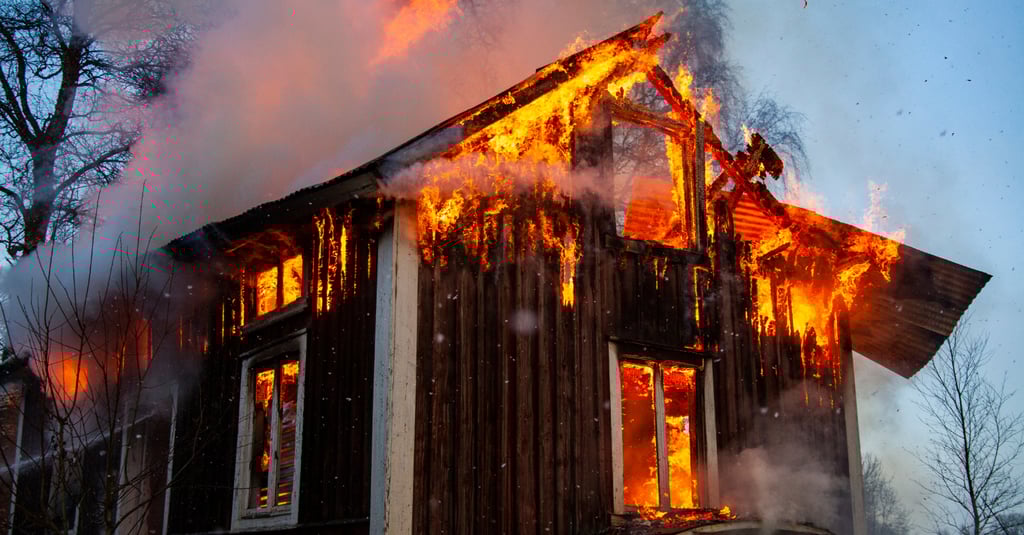
Wildfire loss is often described like a wall of flame. That image is dramatic, but incomplete. In many events, embers arrive first. They collect in corners, vents, gutters, under decks, and against walls. If they find a receptive fuel, a home can ignite without a flame front ever touching it.
Three ways homes ignite
· Ember ignition, wind driven embers land on or near the home and start small fires that grow. Embers cause up to 90% of home ignitions, and should always be the proirirty when it comes to hardening homes for wildfire.
· Radiant heat, intense heat from nearby burning fuels can break windows and preheat materials until they ignite
· Direct flame contact, fire burns right up to the structure through connected fuels, debris, or attachments like fencing
The highest leverage zone, the first five feet
IBHS and CAL FIRE both emphasize the first 0 to 5 feet as a priority zone for ember resistance. IBHS has also highlighted research showing that creating an ember resistant buffer in that zone can meaningfully reduce ignition risk. This is not about removing every plant, it is about eliminating receptive fuels that can carry fire to the structure.
The building matters as much as the yard
A defensible space project reduces exposure, but a home still needs basic hardening so embers cannot enter, lodge, and ignite. For example, IBHS guidance calls for ember resistant vents or 1/8 inch or finer metal mesh, because vents are a common ember entry point. NFPA guidance similarly emphasizes structural vulnerabilities within the home ignition zone.
· Vents: upgrade to ember resistant vents or add 1/8 inch metal mesh where appropriate
· Roof and gutters: keep clear of needles and leaf litter, and address debris traps
· Under decks: remove stored combustibles and prevent debris accumulation
· Fences: treat attached combustible fencing as a direct path to the home, consider non combustible transitions near the structure
Why we talk about ignition prevention
The goal is not to win a fight with a wildfire. The goal is to prevent the first small ignition from taking hold, because once the structure is burning, it becomes fuel for nearby homes. That is why the immediate zone and the building envelope matter so much.
Related reading
· Defensible space explained, what it is, and what it is not
· What is my wildfire risk, and why a score helps you prioritize
· Community wildfire risk, shared risk, and how to move the needle together
Key references
· Insurance Institute for Business and Home Safety. (n.d.). Ember entry: vents. https://ibhs.org/wildfire/ember-entry-vents/
· Insurance Institute for Business and Home Safety. (n.d.). Near building non combustible zone. https://ibhs.org/wildfire/near-building-noncombustible-zone/
· Insurance Institute for Business and Home Safety. (n.d.). Wildfire Prepared Home overview. https://wildfireprepared.org/wildfire-prepared-home-overview/
· CAL FIRE. (n.d.). Defensible space. Ready for Wildfire. https://readyforwildfire.org/prepare-for-wildfire/defensible-space/
· NFPA. (n.d.). Preparing homes for wildfire. https://www.nfpa.org/education-and-research/wildfire/preparing-homes-for-wildfire
· FEMA. (2025). Homeowner’s Guide to Reducing Wildfire Risk Through Defensible Space. https://www.fema.gov/sites/default/files/documents/fema_rsl_marshall-mat-homeowners-guide-to-reducing-wildfire-risk-through-defensible-space_042025.pdf